Introduction: Two Easy Ways to Buy Today and Pay Later
You’ve found something you want to buy for $600.
At checkout, you might have several choices:
Option A: Charge $600 to your credit card.
Option B: Use Buy Now, Pay Later and divide the $600 into several instalments.
Both allow you to make the purchase without immediately handing over $600 in cash.
So which is better?
Credit card or BNPL?
The answer isn’t simply whichever offers the smaller payment today.
Both are forms of financial commitment. The better choice depends on whether you understand the terms, how you manage repayments and—most importantly—whether you can actually afford the purchase.
Let’s compare them.
1. What’s the Main Difference Between a Credit Card and BNPL?
A credit card gives you access to a revolving credit limit provided by a bank or card issuer.
If your limit is $5,000, for example, you can generally make purchases up to your available limit. When you repay what you’ve borrowed, that credit becomes available again.
BNPL usually works differently.
A BNPL arrangement allows you to make a particular purchase now and divide its cost into scheduled payments.
A simplified comparison looks like this:
| Credit Card | BNPL | |
|---|---|---|
| Basic structure | Revolving credit facility | Instalments for purchases |
| Payment | Monthly card bill | Scheduled instalments |
| Interest-free possible? | Yes, if eligible purchases are paid fully by the due date | Depending on the plan and terms |
| If you don’t pay properly | Interest and potentially late charges | Consequences depend on provider/plan |
| Ease of repeat spending | High | High |
| Main risk | Carrying an unpaid revolving balance | Accumulating multiple instalment plans |
Neither is automatically good or bad.
How you use them matters more than the label.
2. When Can a Credit Card Be Useful?
Credit cards can be convenient for everyday transactions, online purchases and larger expenses.
One important feature is the interest-free credit period.
According to Singapore’s MoneySense guidance, cardholders generally receive around 20 to 25 days from their monthly bill to make payment by the due date. If the bill is paid fully and on time, interest is generally avoided.
However, the situation changes significantly if you don’t pay the balance in full.
MoneySense currently notes that credit-card interest commonly ranges from approximately 25% to 29% per annum on unpaid balances.
And this is where credit cards can become expensive.
3. The Credit Card Trap: “I’ll Just Pay the Minimum”
Suppose your credit-card statement is $2,000.
You see that you don’t have to pay all $2,000 immediately.
There is a minimum payment.
That can create the impression that:
“As long as I make the minimum payment, I’m fine.”
But the remaining balance hasn’t disappeared.
It continues to be owed, and interest can apply.
MoneySense illustrates how persistent minimum payments can cause credit-card debt to last for years because interest continues accumulating on outstanding amounts.
So the important distinction is:
Minimum payment ≠ clearing your debt.
If you regularly use your card but cannot pay the statement balance in full, it may be a sign that spending has exceeded your current budget.
4. When Can BNPL Be Useful?
BNPL can be convenient when you have a necessary purchase that you could afford but would prefer to spread across several predictable payments.
For example:
$600 purchase → $200 + $200 + $200
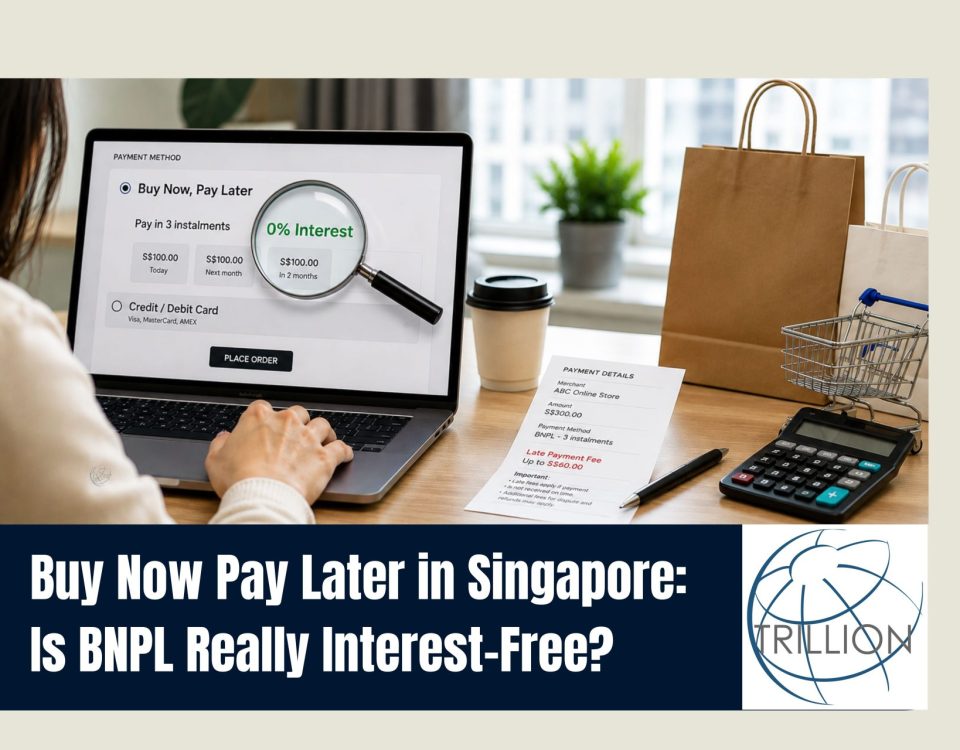
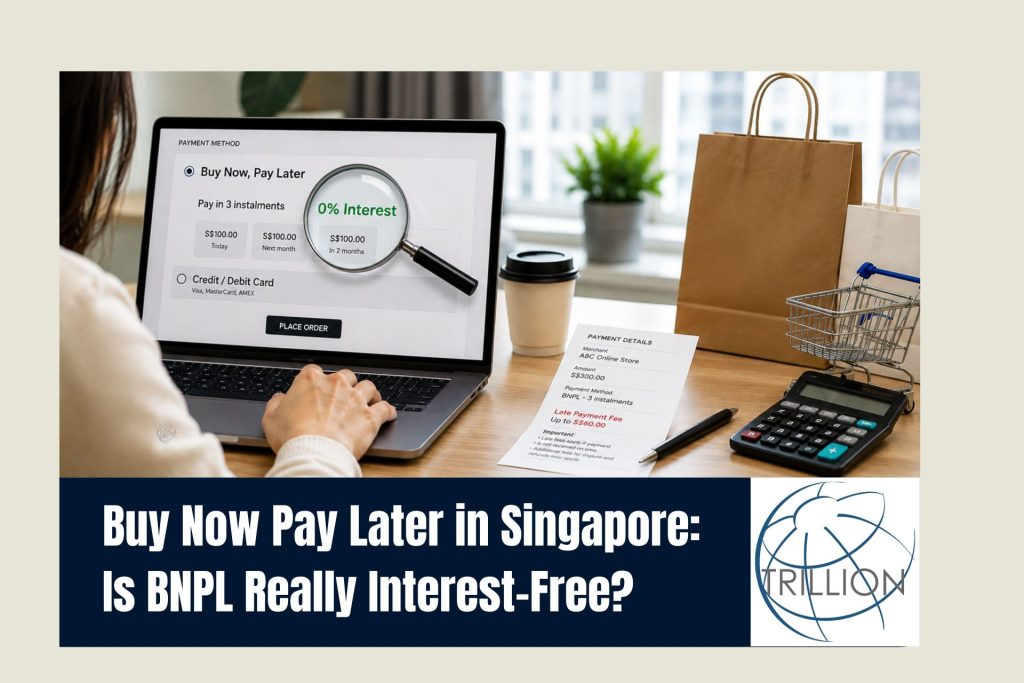
If the particular arrangement is genuinely interest-free, carries no applicable additional charges and every payment is made correctly, you may ultimately pay the same $600.
But as we discussed in our earlier guide, interest-free doesn’t mean risk-free.
The biggest danger may be how easily another instalment can be added.
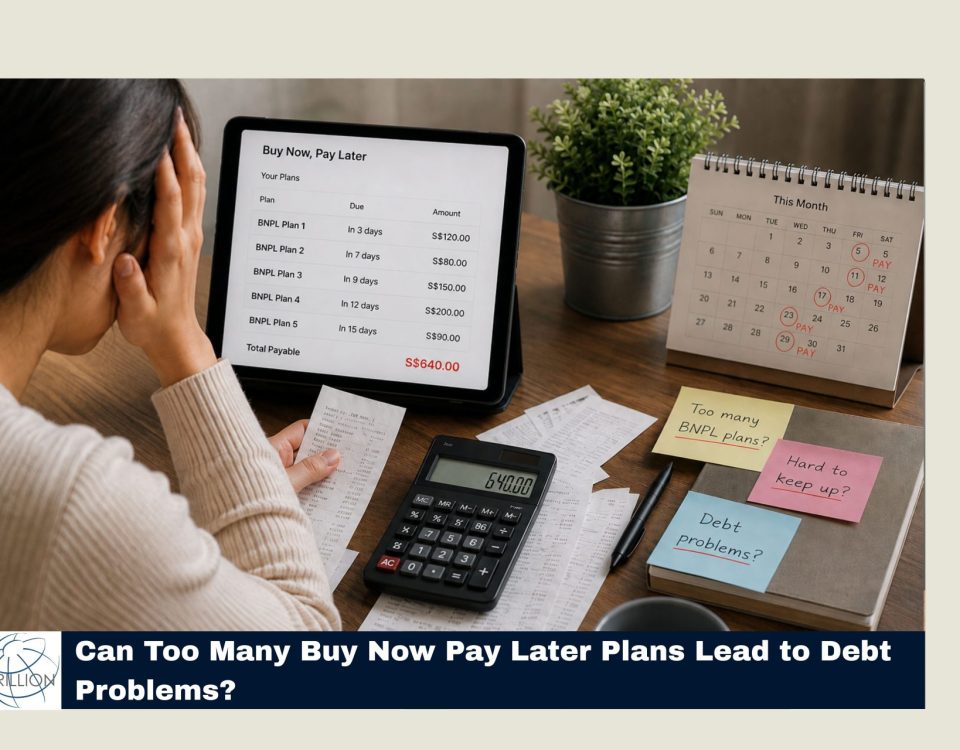
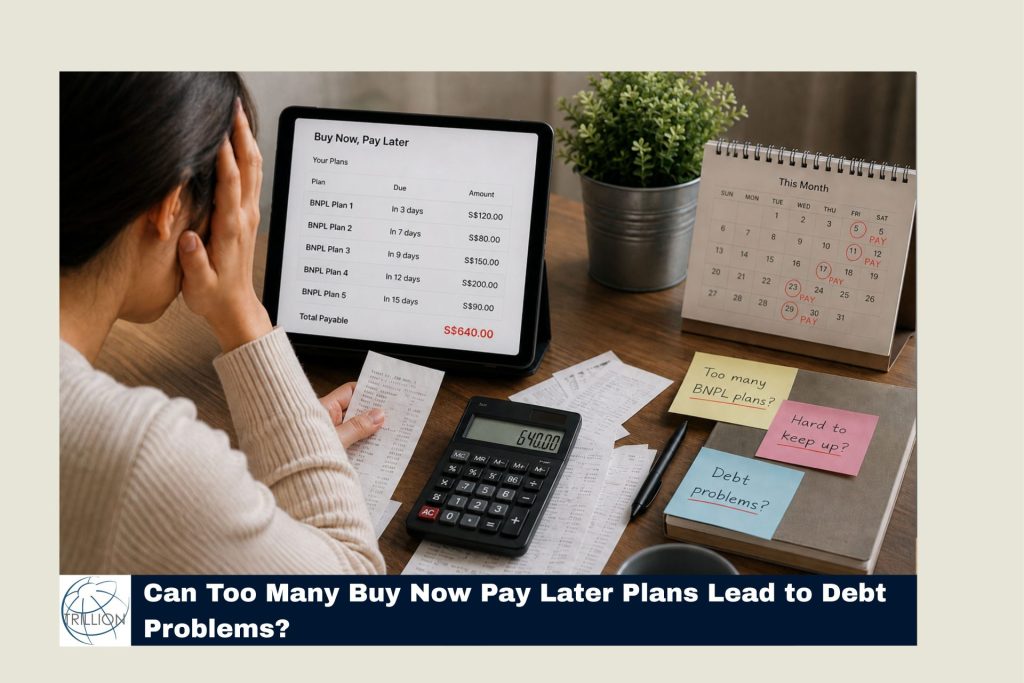
5. The BNPL Trap: “It’s Only $50 a Month”
Imagine you’ve already committed to:
- $100/month for clothes
- $80/month for electronics
- $150/month for a phone
- $70/month for another online purchase
Then you see something else you want.
Only $60 per instalment.
Looking at the new $60 by itself makes the purchase seem affordable.
But your relevant number isn’t $60.
It’s:
$100 + $80 + $150 + $70 + $60 = $460
You’ve committed $460 of future income before next month’s normal expenses have even been paid.
Singapore’s MoneySense specifically cautions that overlapping instalment payments can accumulate and affect monthly cash flow.
6. Credit Card vs BNPL: Which Costs More?
There isn’t one universal answer.
It depends on the specific product and how you repay it.
Scenario A: Credit card paid fully and on time
You purchase something for $500 and pay your card statement fully by the due date.
You generally avoid credit-card interest on the purchase.
Scenario B: Credit card balance carried forward
You purchase something for $500 but only make partial or minimum repayments.
Interest may then apply to the outstanding balance.
The longer that balance remains unpaid, the more expensive borrowing can become.
Scenario C: Interest-free BNPL paid correctly
You purchase something for $500 and make all agreed instalments on time under a genuinely interest-free arrangement with no applicable additional charges.
Your total may remain $500.
Scenario D: BNPL payments are missed
Depending on the particular provider and arrangement, late charges or other consequences may apply.
So asking:
“Which has the lower interest rate?”
doesn’t tell the whole story.
A better question is:
“What will this purchase cost me in total based on how I realistically expect to repay it?”
7. What About Credit Card Instalment Plans?
There’s another option that can make the comparison confusing: credit-card instalment plans.
These aren’t necessarily the same thing as third-party BNPL services.
Certain arrangements between card issuers and merchants allow eligible purchases to be divided into monthly instalments.
MoneySense explains that some credit-card instalment arrangements can be interest-free when instalments are paid fully by their due dates.
But consumers should still understand the terms.
For example, depending on the arrangement, you may still have repayment obligations even if something happens to the merchant, and early termination of an instalment arrangement may potentially carry charges.
So once again:
Read the conditions—not merely the words “0% instalment”.
8. Which Is Better for Controlling Your Spending?
This depends largely on your habits.
A credit card may suit someone who:
- tracks spending carefully;
- checks statements every month;
- pays the balance fully and on time; and
- doesn’t treat the credit limit as additional income.
BNPL may suit someone who:
- understands the complete purchase price;
- has very few existing instalment commitments;
- can comfortably afford every scheduled payment; and
- doesn’t use smaller instalments as justification to buy more.
But neither may be appropriate if you are already struggling with cash flow.
If you’re using BNPL because your credit card is maxed out—or using a credit card because your BNPL payments have consumed your available cash—the real issue isn’t choosing between the two.
It’s overall debt and spending affordability.
9. The Most Important Question: Can You Afford the Purchase?
Suppose you earn $3,000 per month.
After essential expenses and existing commitments, you have $400 available.
You want to buy something costing $1,200.
BNPL might show:
“Only $400 × 3.”
Your credit card might allow you to charge the entire $1,200 immediately.
Technically, both payment methods may allow the transaction to happen.
But neither changes the fact that $1,200 is a significant expense relative to your available cash flow.
Access to credit is not the same thing as affordability.
Before choosing a payment method, ask:
“Would I still buy this if I had to pay cash today?”
That question can reveal whether you’re choosing a convenient payment method—or using credit to make an otherwise unaffordable purchase feel affordable.
10. Rewards and Cashback Shouldn’t Decide Whether You Spend
Credit cards may offer:
- cashback;
- air miles;
- reward points; or
- promotional discounts.
BNPL providers and merchants may similarly offer vouchers, discounts or promotions.
These benefits can be useful when you were already going to make an affordable purchase.
They are much less useful when they convince you to spend money you otherwise wouldn’t have spent.
Saving $20 on a $500 purchase you don’t need hasn’t made you $20 richer.
You’ve still spent $480.
11. Which Should You Use for an Emergency?
This requires a different way of thinking.
If the expense is genuinely urgent—a necessary medical expense or essential household repair, for example—the first question shouldn’t be:
“Credit card or BNPL?”
Instead, determine:
- What is the exact amount required?
- Do I have emergency savings?
- When can I realistically repay the amount?
- What will each available option cost in total?
- What other repayments do I already have?
The payment method that gives you the smallest instalment isn’t necessarily the most affordable overall.
12. What If You’re Already Struggling With Both?
Perhaps you already have:
credit-card balance + BNPL instalments + personal loan + household expenses.
At that stage, adding another credit facility can make matters worse.
Start by listing everything you owe:
| Commitment | Outstanding Amount | Monthly Payment | Interest/Fees |
|---|---|---|---|
| Credit card | — | — | — |
| BNPL 1 | — | — | — |
| BNPL 2 | — | — | — |
| Personal loan | — | — | — |
Then calculate your total monthly repayment obligations.
Singapore’s MoneySense recommends reviewing debts, avoiding too many sources of credit and generally prioritising repayment of higher-interest debts.
If you are having difficulty keeping up, contact the relevant financial institution or provider early rather than continuously borrowing from another source to meet existing repayments.
13. So, Is Credit Card or BNPL Better?
Here’s a simple way to look at it.
If you can pay your credit-card bill completely and on time:
A credit card can provide payment convenience without necessarily incurring purchase interest, subject to your card’s terms.
If you use BNPL selectively and can comfortably meet every instalment:
An appropriate interest-free arrangement can help spread the timing of a purchase.
If you regularly carry credit-card balances:
The interest cost can become significant.
If you continuously stack BNPL plans:
Your future monthly cash flow can become increasingly restricted.
If you cannot comfortably afford either:
Neither is the right answer.
Delaying a non-essential purchase may be the best financial decision.
Conclusion: Don’t Ask Which Lets You Spend More
Credit cards and BNPL have made paying for purchases remarkably convenient.
But convenience shouldn’t be confused with affordability.
A credit card can become expensive when outstanding balances aren’t cleared.
BNPL can become difficult when several apparently small instalments accumulate simultaneously.
Instead of asking:
“Which option lets me buy this today?”
ask:
“Which option can I comfortably repay—and do I actually need to make this purchase now?”
At our professional licensed moneylending company Trillion Credit in Singapore, we believe financial control begins with understanding every commitment you make.
Credit cards, BNPL and personal loans can all have legitimate purposes. But no financial product can compensate for consistently spending beyond what your income can support.
Sometimes the smartest financing option is simply waiting until you can afford the purchase.
Need Financial Support for a Genuine Expense?
If you’re experiencing a genuine cash-flow shortage rather than financing discretionary shopping, review your existing BNPL, credit-card and loan commitments before borrowing further.
If borrowing is still necessary, speak with a licensed lender to understand the available regulated options, total borrowing cost and repayment obligations before deciding.
Choose based on affordability—not simply on how small the first payment looks.
Need urgent financial assistance? Contact us today to explore safe and transparent emergency loan options tailored to your needs.
Walk into our branch or apply online anytime.
We’re here to provide fast, transparent, and legal cash loans.
📱 Call us at 65090111
📝 Or apply now at https://trillioncredit.com.sg/apply-for-loan/