Singapore’s Haze Is Back — But Are Your Household Finances Prepared?
Singaporeans are once again dealing with hazy skies and deteriorating air quality.
In October 2026, smoke haze from regional forest and peatland fires has affected Singapore, prompting renewed concerns about health, outdoor activities and household preparedness.
According to the National Environment Agency (NEA), Singapore’s 24-hour Pollutant Standards Index (PSI) ranged from 130 to 199 as at 7pm on 17 October 2026, within the Unhealthy range.
NEA also forecast PSI levels of 150 to 220 for 18 October 2026, ranging from Unhealthy to Very Unhealthy.
Source: NEA — Haze Situation Update, 17 October 2026.
While most people are understandably focused on protecting their health, the haze can also create another concern:
Unexpected household expenses.
Air purifiers, replacement filters, suitable masks, medical consultations and additional transport arrangements may place pressure on household budgets.
For families already managing rising living costs and monthly financial commitments, even a few unexpected purchases can become stressful.
But does preparing for the haze necessarily mean spending hundreds of dollars?
And what should you do if these additional expenses arrive when money is already tight?
Let’s explore how Singapore households can manage haze-related costs responsibly without unnecessary spending or debt.
1. How Can the Haze Affect Your Household Budget?
When we think about the haze, we usually think about air quality.
However, periods of poor air quality can also change how households spend money.
Some expenses may arise suddenly, while others may increase gradually.
Air purifiers and replacement filters
Households may consider using air purifiers to improve indoor air quality, particularly where family members are more vulnerable to haze exposure.
However, purchasing a new air purifier can be a significant expense.
Even households that already own one may need to replace filters.
Suitable masks
Some individuals may consider purchasing appropriately fitted masks for necessary outdoor activities, depending on official health guidance.
But buying excessive quantities can unnecessarily increase spending.
Medical expenses
Individuals experiencing symptoms or worsening existing conditions may require medical attention.
This could involve consultation fees, prescribed medication or other necessary expenses.
Additional transport costs
Some households may choose to adjust travel arrangements to reduce outdoor exposure, where appropriate.
For example, someone who normally walks a long distance may consider a different transport arrangement.
Changes to everyday routines
Families may spend more time indoors, change planned activities or make other adjustments during prolonged haze episodes.
These changes can sometimes affect household spending.
The important point is that haze-related expenses should be planned around actual needs rather than fear or panic.
2. Do You Really Need to Buy an Air Purifier?
When haze conditions worsen, air purifiers can quickly become a topic of conversation.
But before rushing to buy one, consider whether you actually need a new device.
Check what you already have
Do you already own an air purifier?
If so, check its condition and whether its filter needs replacement.
Replacing a suitable filter may cost less than buying another machine.
Consider the room you want to protect
Rather than purchasing multiple air purifiers immediately, assess your household’s actual needs.
For example, you may want to prioritise a room where vulnerable family members spend significant time.
Compare specifications, not just prices
If you decide to buy an air purifier, consider:
- Whether it is suitable for the intended room size
- Its filtration capabilities
- The cost and availability of replacement filters
- Electricity consumption
- Warranty and maintenance requirements
The cheapest machine is not necessarily the most economical over time.
Equally, the most expensive machine is not automatically the best choice.
Avoid panic buying
A haze episode can create urgency.
But urgency should not lead to unnecessary purchases.
Check official health recommendations before deciding which protective measures are appropriate for your household.
For current advice, refer to the Ministry of Health’s official haze guidance.
3. Don’t Spend More Than Necessary on Masks
During haze periods, masks may become another household expense.
However, not everyone requires the same protective measures.
The appropriate precautions depend on air quality, individual health conditions and the duration and intensity of outdoor activities.
For example, NEA’s health advisories distinguish between healthy individuals and more vulnerable groups, including elderly people, pregnant women, children and those with chronic heart or lung conditions.
Before purchasing large quantities of masks:
- Check the latest official health advisory.
- Determine whether masks are recommended for your circumstances.
- Select an appropriate mask where necessary.
- Buy reasonable quantities rather than stockpiling.
- Avoid paying inflated prices out of panic.
Spending responsibly does not mean compromising on necessary health protection.
It means buying what is appropriate for your circumstances rather than purchasing items simply because everyone else is doing so.
4. A Practical Haze Emergency Budget for Singapore Families
Let’s consider a hypothetical Singapore household.
A family of four is preparing for a period of unhealthy air quality.
They already have an air purifier but need to replace its filter.
They also anticipate some additional household expenses.
| Potential Expense | Illustrative Budget |
|---|---|
| Replacement air purifier filter | $60 |
| Suitable masks, if needed | $30 |
| Additional transport allowance | $50 |
| Contingency for necessary medical expenses | $100 |
| Other essential household adjustments | $40 |
| Total Budget | $280 |
These figures are illustrative budgeting allowances, not actual market prices or recommended purchases. Medical and protective needs vary by household.
The family has now identified a potential additional expense of $280.
For a household with comfortable savings, this may be manageable.
But for someone living from paycheck to paycheck, an unexpected $280 can be significant.
The solution is not necessarily to borrow immediately.
Instead, the family should first identify which expenses are genuinely necessary.
For example, if additional transport and other household adjustments are unnecessary, the budget could fall by $90.
That reduces the expected expenditure from $280 to $190.
The first step in managing unexpected expenses is determining what you actually need to spend.
5. How to Prioritise Haze-Related Expenses When Money Is Tight
Not all expenses have the same urgency.
A practical approach is to divide them into three categories.
Category A: Essential expenses
These are costs directly related to necessary health protection or care.
Examples may include:
- Necessary medical consultations
- Prescribed medication
- Appropriate protective measures recommended for your circumstances
- Essential household arrangements for vulnerable family members
These expenses should generally take priority.
Category B: Useful but flexible expenses
These may improve comfort or convenience but do not necessarily require immediate spending.
Examples include:
- Replacing a functioning air purifier with a newer model
- Purchasing additional appliances
- Upgrading equipment beyond what your household needs
Consider postponing these purchases if your budget is tight.
Category C: Unnecessary expenses
These may include:
- Stockpiling excessive supplies
- Buying multiple devices without assessing your needs
- Purchasing premium products solely because of advertising
- Making impulse purchases during a haze-related promotion
These expenses can often be avoided.
The goal is to protect your household without creating unnecessary financial pressure.
6. Should You Use Your Emergency Savings During the Haze?
An emergency fund exists to help manage unexpected expenses.
If the haze creates a necessary cost that cannot reasonably be postponed, using part of your emergency savings may be appropriate.
For example:
You have $2,000 in emergency savings.
An unexpected essential expense costs $200.
Using $200 from your savings may be preferable to taking on an interest-bearing loan for the same amount.
However, consider your overall financial circumstances.
If using your savings would leave you unable to pay rent, utilities or other essential expenses, you may need to review the situation more carefully.
How much emergency savings should you have?
A commonly recommended starting point is to build an emergency fund sufficient to cover approximately three to six months of essential expenses, with a larger buffer potentially appropriate for households facing less predictable income.
But don’t feel discouraged if you haven’t reached that amount.
Even a smaller emergency fund can help.
For example:
Saving $50 every month builds:
- $300 in six months
- $600 in twelve months
- $1,200 in twenty-four months
These savings can help you manage future unexpected expenses without automatically relying on credit.
7. What If You Don’t Have Enough Savings?
This is where many Singapore households face a difficult decision.
Suppose your household needs to spend an additional $300 during the haze.
But after paying your monthly bills, you have only $100 available.
That leaves a shortfall of $200.
Before considering a personal loan, ask yourself:
Can the expense be reduced?
Could you replace an existing filter instead of purchasing a new air purifier?
Could you choose a suitable lower-cost option?
Can part of the expense be postponed?
Not every purchase needs to be made immediately.
Prioritise necessary health-related expenses.
Can you adjust other spending temporarily?
You may be able to reduce discretionary spending on dining, entertainment or shopping.
Is assistance available?
If medical or household costs are creating serious financial hardship, explore appropriate support schemes or assistance before taking on additional debt.
Is borrowing genuinely necessary?
Only after reviewing your alternatives should you consider whether borrowing is appropriate.
A temporary financial shortfall does not automatically justify taking a loan.
8. Should You Use Buy Now, Pay Later for Haze-Related Purchases?
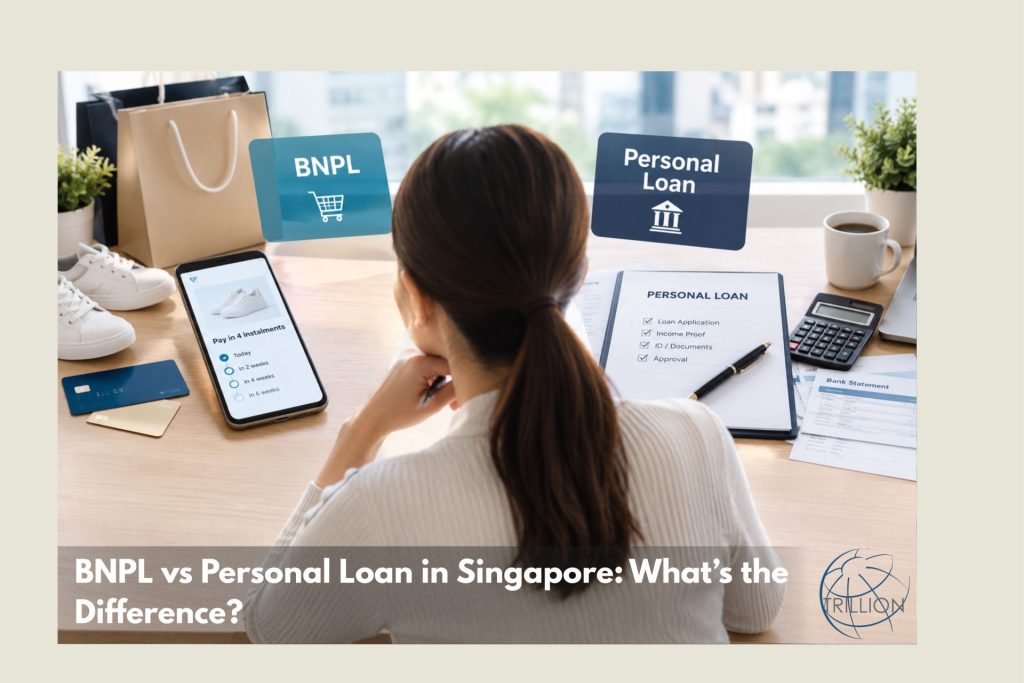
Some consumers may consider using Buy Now, Pay Later (BNPL) to purchase an air purifier or other household equipment.
For example:
An air purifier costs $450.
A BNPL arrangement allows payment in three instalments of $150.
At first glance, this appears more manageable than paying $450 immediately.
However, the purchase still costs $450, assuming there are no additional charges.
You have simply divided the payment into future commitments.
Before using BNPL, ask:
- Can I afford all three instalments?
- Do I already have other BNPL payments?
- What happens if I miss a payment?
- Are there any applicable fees?
- Could I purchase a suitable lower-cost alternative?
BNPL may help spread the cost of an affordable purchase.
But it should not be used to justify spending more than you can comfortably repay.
If you’re already struggling with BNPL instalments, adding another plan may worsen your financial position.
9. Should You Take a Personal Loan for Unexpected Haze Expenses?
This is an important question.
Not every unexpected expense requires borrowing.
For relatively small purchases, using available savings, reducing non-essential spending or adjusting your budget may be more economical.
However, some households may face a genuine short-term cash-flow shortage involving necessary expenses.
In such situations, they may consider available financial options, including personal loans.
Before taking any loan, evaluate the following.
How much do you actually need?
If the shortfall is $300, avoid borrowing $2,000 simply because that amount is offered.
What is the total borrowing cost?
Consider interest, permitted fees and the total repayment amount.
Can you afford the repayments?
Your repayment obligations should fit within your budget after essential household expenses.
How long will you be repaying?
An expense arising from a temporary haze episode should not unnecessarily create a long-term debt burden.
Are there cheaper alternatives?
Review your savings, available assistance and other legitimate options first.
Borrowing should be a carefully considered financial decision, not an automatic reaction to unexpected expenses.
10. What Should You Know About Licensed Moneylender Personal Loans?
In Singapore, licensed moneylenders operate under a regulated framework.
Consumers who are considering a personal loan should understand the applicable rules and costs before signing any agreement.
Interest rates
Licensed moneylenders are generally permitted to charge interest of up to 4% per month on the outstanding principal, subject to the relevant rules.
Loan approval fees
An upfront loan approval fee of up to 10% of the principal may apply.
Repayment obligations
Borrowers should understand their repayment schedule, total repayment amount and consequences of late payment.
Borrowing limits
Unsecured borrowing limits depend on factors including annual income and applicable borrower categories.
Being eligible for a particular amount does not mean you should borrow the maximum.
Verify the licensed moneylender
Always verify that the moneylender is listed on Singapore’s official Registry of Moneylenders.
For official information, visit the Registry of Moneylenders.
A licensed personal loan may be an option for an eligible borrower with a genuine financial need, but the borrowing cost must be weighed against the alternatives.
11. Avoid These Five Financial Mistakes During Singapore’s Haze
Mistake 1: Panic buying
Purchasing excessive masks, filters or equipment can quickly increase expenses.
Buy according to actual needs and official guidance.
Mistake 2: Buying expensive products without comparison
A premium air purifier may offer features your household does not require.
Compare suitability, maintenance costs and value.
Mistake 3: Using BNPL without checking existing commitments
Another $100 or $150 instalment may look affordable in isolation.
But several instalments can add up.
Mistake 4: Borrowing more than necessary
A small financial shortfall should not automatically lead to a much larger loan.
Borrowing more increases repayment obligations.
Mistake 5: Ignoring your emergency savings
If you have no emergency buffer, consider using this experience as a reminder to begin building one.
Even small monthly contributions can improve your financial preparedness.
12. How to Prepare Financially for Future Haze Episodes
Singapore has experienced haze episodes before, and similar disruptions may occur again.
Instead of waiting for the next period of poor air quality, consider preparing your household in advance.
Maintain essential household equipment
If you already own an air purifier, check its condition and filter requirements periodically.
Keep a modest contingency budget
You could set aside a small amount for unexpected household or health-related expenses.
Review your insurance and healthcare arrangements
Understand what your existing coverage provides and what out-of-pocket costs you may face.
Avoid excessive monthly debt commitments
The fewer unnecessary repayments you have, the more flexibility you retain when unexpected expenses arise.
Build emergency savings gradually
Financial preparedness does not require saving thousands of dollars overnight.
Start with an achievable amount and build from there.
13. Frequently Asked Questions About Haze Expenses in Singapore
Do I need to buy an air purifier during the Singapore haze?
Not necessarily. The appropriate measures depend on your household circumstances, indoor environment and official health guidance. If you already have a suitable device, maintenance or filter replacement may be sufficient. Consult official guidance before making major purchases.
Are N95 masks necessary for everyone during haze?
Not everyone requires the same protective measures. Recommendations depend on current air quality, health status and planned activities. Refer to NEA and MOH guidance, especially for vulnerable individuals.
How much should I budget for haze-related expenses?
There is no fixed amount. Review your household’s actual needs, existing supplies, medical requirements and available savings. Avoid treating illustrative budgets or promotional prices as mandatory spending targets.
Should I use BNPL to buy an air purifier?
BNPL may spread the cost of a purchase, but it does not reduce the purchase price. Only consider it if the item is necessary, the terms are clear and all instalments are affordable.
Can I take a personal loan for unexpected household expenses?
Personal loans may be available to eligible borrowers, depending on the lender’s requirements and loan terms. However, consider savings, lower-cost alternatives and available assistance first. Any borrowing should be affordable and proportionate to the actual need.
What if I cannot afford necessary haze-related expenses?
Prioritise essential needs, review your household budget, consider available support and avoid unnecessary purchases. If you face medical symptoms or worsening health conditions, seek appropriate medical advice rather than delaying necessary care solely because of financial concerns.
Where can I check Singapore’s latest haze conditions?
Use the official NEA haze information portal for current air-quality readings, forecasts and activity guidance. For health-related advice, refer to the Ministry of Health’s haze page.
Conclusion: Protect Your Health Without Compromising Your Financial Well-Being
Singapore’s October 2026 haze is a reminder that unexpected events can affect more than our daily routines.
They can also affect our household finances.
From protective supplies and household equipment to possible medical and transport expenses, additional costs can appear with little warning.
However, preparing for the haze does not necessarily mean spending large amounts of money.
The most important steps are to:
Prioritise genuine needs.
Follow official health guidance.
Avoid panic buying.
Compare costs before purchasing.
Use emergency savings responsibly.
Avoid unnecessary debt.
At our professional licensed moneylending firm Trillion Credit in Singapore, we believe financial products should help consumers maintain greater control over their finances.
Sometimes borrowing may be considered for a genuine and unavoidable financial need.
But not every unexpected expense requires a loan.
The goal should always be to make a financial decision that addresses today’s needs without creating unnecessary pressure tomorrow.
Facing an Unexpected Financial Shortfall?
If an essential household expense has created a genuine cash-flow shortage, take time to review your options.
Where borrowing is necessary, speak with our professional loan consultants to understand the available loan amount, interest, applicable fees and repayment obligations before making a decision.
Protect your health. Plan your expenses. Borrow responsibly.
Need a loan? Walk into our branch or apply online anytime.
We’re here to provide fast, transparent, and legal cash loans.
📱 Call us at 65090111
📝 Or apply now at https://trillioncredit.com.sg/apply-for-loan/