Introduction: The Biggest Shopping Season Is Here — But Is Your Budget Ready?
November and December are exciting months for shoppers in Singapore.
From the 11.11 Singles’ Day Sale to Black Friday, 12.12 promotions and Christmas shopping, retailers and online platforms compete to attract consumers with discounts, vouchers and limited-time offers.
In 2026, several major shopping dates are approaching:
| Shopping Event | Date |
|---|---|
| 11.11 Singles’ Day Sale | 11 November 2026 |
| Black Friday | 27 November 2026 |
| Cyber Monday | 30 November 2026 |
| 12.12 Year-End Sale | 12 December 2026 |
| Christmas | 25 December 2026 |
For consumers, these promotions can offer opportunities to purchase necessary items at lower prices.
However, they can also encourage spending that wasn’t originally planned.
A $300 purchase becomes easier to justify when advertised at 30% off.
A $600 purchase may seem affordable when divided into three BNPL instalments.
And a credit card can make it easy to spend today without immediately seeing the money leave your bank account.
But when the sales are over, the repayments remain.
The challenge isn’t simply finding the best discount. It’s making sure today’s purchases don’t become next year’s financial problems.
Here’s how to enjoy Singapore’s year-end sales without falling into unnecessary BNPL or credit-card debt.
1. Why Do Singaporeans Tend to Overspend During Year-End Sales?
Year-end promotions create a combination of excitement, urgency and perceived savings.
Retailers frequently use messages such as:
“Limited-Time Offer!”
“Only 2 Hours Left!”
“Extra 20% Off Today!”
“Buy Now, Pay Later!”
These promotions can make consumers feel they must act immediately or risk missing a valuable opportunity.
However, a discount is only a saving if you were already planning to purchase the item.
Consider this example
You see a pair of headphones advertised at:
Original price: $300
Sale price: $210
The advertisement says you save $90.
But if you didn’t need the headphones and weren’t planning to purchase them, you haven’t saved $90.
You’ve spent $210.
This is one of the most important financial principles to remember during shopping promotions.
A discount doesn’t automatically make a purchase financially sensible.
Singapore’s MoneySense also highlights how promotional offers, urgency and instalment-payment options can influence shopping decisions.
For more information, read MoneySense’s guide to avoiding common shopping traps.
2. The Hidden Danger of Buy Now, Pay Later During 11.11 Sales
Buy Now, Pay Later (BNPL) has become a familiar payment option for online shoppers.
Instead of paying the full purchase price immediately, consumers can divide the cost into smaller instalments.
For example:
Purchase price: $600
A three-instalment BNPL arrangement might look like:
| Instalment | Amount |
|---|---|
| First payment | $200 |
| Second payment | $200 |
| Third payment | $200 |
| Total | $600 |
Assuming the arrangement is interest-free and no additional charges apply, the total remains $600.
That may seem manageable.
But the problem often begins when several BNPL purchases overlap.
Example: Multiple purchases during the year-end sales
Suppose you make these purchases:
| Purchase | Total Price | Monthly Instalment |
|---|---|---|
| Smartphone | $900 | $300 |
| Clothing | $240 | $80 |
| Home appliance | $450 | $150 |
| Christmas gifts | $300 | $100 |
| Total | $1,890 | $630 |
Illustrative example assuming three equal instalments per purchase, without interest or fees.
Individually, each payment may appear affordable.
But together, you’ve committed $630 in monthly repayments during the overlapping instalment period.
For someone earning $2,500 a month, that represents approximately 25% of monthly income, before accounting for rent, food, transport and existing debts.
This is why consumers should assess their total BNPL commitments, rather than judging each purchase separately.
3. BNPL May Be Interest-Free, But It Isn’t Risk-Free
Some BNPL arrangements offer interest-free instalments when payments are made according to their terms.
However, consumers should understand that missed payments may have consequences.
Depending on the provider and arrangement, these may include:
- Late-payment charges
- Account suspension
- Restrictions on further BNPL purchases
- Requests for outstanding payments
- Further recovery action if amounts remain unpaid
Even without interest, several overlapping instalments can create cash-flow difficulties.
Before using BNPL during a sale, ask yourself:
Can I afford every instalment?
How much BNPL do I already owe?
Will these repayments overlap with Christmas or January expenses?
What happens if I miss a payment?
Most importantly:
Don’t use BNPL to justify a purchase you couldn’t otherwise afford.
4. Credit Cards: Convenient for Shopping, Costly When Balances Aren’t Repaid
Credit cards are another popular payment method during online sales.
They may offer rewards, cashback or promotional benefits.
However, the financial outcome depends on how the card is used.
If you pay your statement balance in full by the due date, you can generally avoid interest on eligible retail purchases, subject to the card’s terms.
But if you carry an outstanding balance, interest charges may apply.
Example: Carrying a credit-card balance after Black Friday
Suppose you spend:
$2,000 during the year-end sales.
You subsequently pay only part of your credit-card statement.
The remaining balance may attract interest according to the card issuer’s terms.
If you continue making new purchases while carrying an outstanding balance, managing the debt can become increasingly difficult.
The original sale discount may eventually be outweighed by borrowing charges.
The important question
Before using your credit card, ask:
“Can I repay the full amount when the statement becomes due?”
If the answer is no, reconsider the purchase.
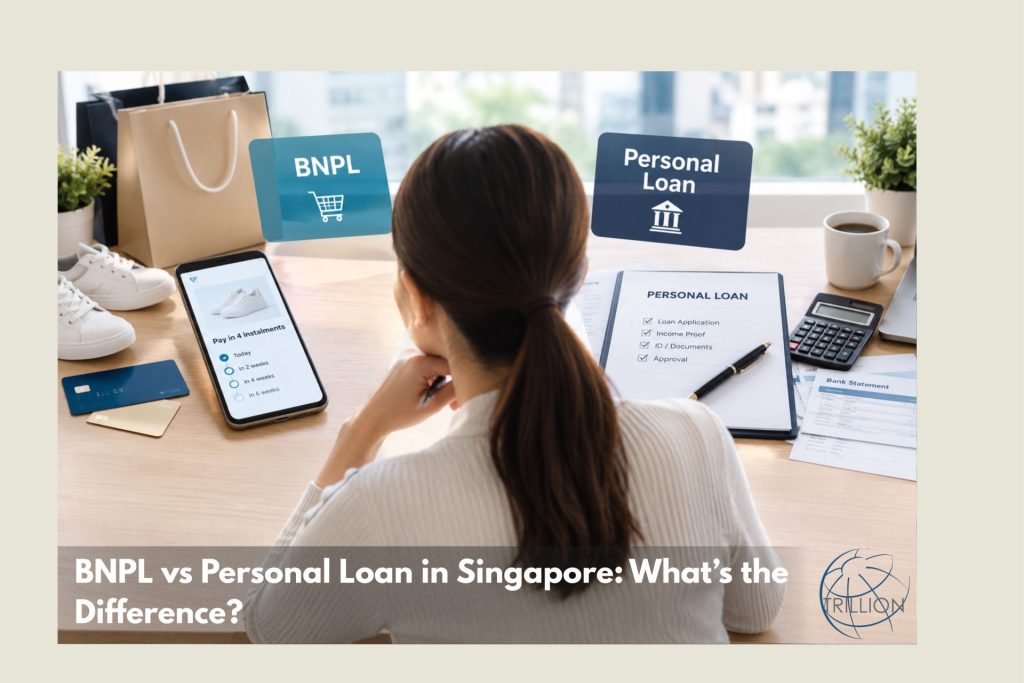
5. BNPL vs Credit Card: Which Is Better for Year-End Shopping?
There is no universal answer.
Both payment methods can be useful when managed responsibly.
However, both can also encourage overspending.
| Feature | BNPL | Credit Card |
|---|---|---|
| Typical repayment | Fixed instalments | Monthly statement with repayment options |
| Interest | Some plans are interest-free | Interest may apply to unpaid balances |
| Late-payment consequences | Depends on provider and terms | Interest and late fees may apply |
| Main risk | Multiple overlapping instalments | Accumulating revolving debt |
| Best practice | Track all instalments | Pay statement balance in full when possible |
The better option depends on your financial circumstances, the terms and your ability to repay.
If you cannot comfortably afford the purchase, neither payment method automatically makes it affordable.
6. Create a Year-End Shopping Budget Before the Sales Begin
One of the simplest ways to avoid overspending is to establish your budget before browsing.
For example, suppose you have $800 available for discretionary year-end spending.
You could allocate it as follows:
| Category | Budget |
|---|---|
| Christmas gifts | $250 |
| Household purchases | $200 |
| Clothing and personal items | $150 |
| Family activities | $100 |
| Contingency | $100 |
| Total | $800 |
Once the budget is set, use it as a spending limit.
Avoid increasing it simply because a retailer offers another discount.
Separate needs from wants
Before making a purchase, ask:
- Is this something I genuinely need?
- Was I planning to buy it before the sale?
- Can I afford it without borrowing?
- Will I still value this purchase next month?
- Am I buying it because of the discount?
A shopping budget works best when it guides your decisions before emotions take over.
7. The 24-Hour Rule: A Simple Way to Avoid Impulse Purchases
Not every discounted item needs to be purchased immediately.
For non-essential purchases, consider waiting at least 24 hours before checking out.
During that period, ask yourself:
Do I really need this?
Can I afford it?
Is this actually a good price?
Will buying it affect my other financial commitments?
If you still want the item after waiting, review the purchase against your budget.
If the desire disappears, you may have avoided unnecessary spending.
The 24-hour rule is particularly useful for items purchased because of flash-sale countdowns or limited-time promotions.
8. Don’t Forget Your Existing Monthly Financial Commitments
Before making new purchases, review your regular expenses.
For example:
| Monthly Expense | Amount |
|---|---|
| Household contribution | $600 |
| Food and transport | $550 |
| Insurance and utilities | $250 |
| Existing loan repayments | $400 |
| Existing BNPL instalments | $200 |
| Total | $2,000 |
Suppose your take-home income is $2,500.
That leaves:
$500 before additional savings and unexpected expenses.
Now imagine you add another $400 in monthly BNPL instalments.
Your remaining monthly buffer falls to just $100.
A single unexpected expense could then cause financial difficulties.
This is why year-end shopping should never be assessed separately from your overall household budget.
9. The January Debt Trap: Why December Spending Can Hurt Next Year’s Finances
One overlooked risk of year-end shopping is that repayments often continue into the following year.
Imagine making several BNPL purchases during:
- 11.11 in November
- Black Friday in late November
- 12.12 in December
- Christmas shopping later in December
Depending on the instalment schedules, you may still be making payments in January or February 2027.
Meanwhile, the new year may bring additional expenses.
For families, these could include:
- School-related purchases
- Insurance renewals
- Household bills
- Chinese New Year preparations
- Other annual financial commitments
A consumer who spends too freely in November and December may therefore enter January with limited financial flexibility.
Don’t let your year-end shopping become your new-year debt problem.
10. Should You Take a Personal Loan to Pay for Year-End Shopping?
Generally, borrowing for non-essential shopping deserves particular caution.
A personal loan may provide access to funds, but it also creates repayment obligations.
Suppose you want to spend $3,000 on electronics, clothing and gifts.
You don’t have sufficient savings.
Taking a personal loan might allow you to complete those purchases immediately.
However, you would then need to repay the borrowed amount, together with applicable interest and fees.
The total cost of your shopping could become higher than the original purchase prices.
Before considering a loan, ask:
Are these purchases essential?
Could I reduce the amount?
Could I wait until I’ve saved enough?
Will the repayments affect my ability to pay essential bills?
For discretionary shopping, postponing the purchase may be financially preferable to borrowing.
11. What If You Have a Genuine Financial Emergency During the Year-End Period?
Not every financial shortfall is caused by shopping.
Unexpected expenses can arise at any time.
For example:
- Essential household repairs
- Necessary medical expenses
- Urgent family needs
- Temporary income disruptions
If an unavoidable expense arises, first determine the actual amount required.
Then consider:
- Available emergency savings
- Whether the expense can be reduced
- Available assistance or alternative arrangements
- Whether existing spending can be adjusted
- The affordability and total cost of any borrowing option
Where borrowing is genuinely necessary, compare the terms carefully.
A personal loan should address a genuine financial need—not simply create additional spending capacity during a sale.
12. What Should You Know Before Borrowing From a Licensed Moneylender?
In Singapore, licensed moneylenders operate under a regulated framework.
Before considering a personal loan, borrowers should understand the applicable interest rates, permitted fees and repayment obligations.
Interest rates
Licensed moneylenders are generally permitted to charge up to 4% interest per month on the outstanding principal, subject to the applicable rules.
Approval fees
An upfront loan approval fee of up to 10% of the principal may apply.
Borrowing limits
Unsecured borrowing limits depend on factors such as the borrower’s annual income and applicable regulatory categories.
Repayment obligations
Borrowers should understand the repayment schedule, total amount repayable and consequences of late payment.
Verify the moneylender
Always verify that the licensed moneylender appears on Singapore’s official Registry of Moneylenders.
Importantly, eligibility for a loan does not mean taking that loan is financially appropriate.
Borrow only when necessary, and only what you can comfortably repay.
13. Seven Practical Ways to Avoid Overspending During 11.11, Black Friday and 12.12
Here is a simple checklist to use throughout the year-end shopping season.
1. Set a total shopping budget
Decide how much you can spend before browsing promotions.
2. Make a shopping list
Prioritise items you genuinely need.
3. Compare prices
A large advertised discount doesn’t always guarantee the lowest available price.
4. Review existing BNPL commitments
Calculate how much you already owe before starting another instalment plan.
5. Pay attention to credit-card balances
Avoid carrying unnecessary high-interest debt.
6. Leave room for unexpected expenses
Don’t spend every dollar of your available cash.
7. Remember that not buying is also an option
A discount is not a reason to purchase something you don’t need.
Conclusion: Enjoy the Sales Without Starting 2027 in Debt
The 11.11, Black Friday and 12.12 sales can provide opportunities to purchase useful items at attractive prices.
But the best deal isn’t always the one with the largest discount.
It’s the one that fits your budget without creating unnecessary financial pressure.
Before checking out:
Ask whether you need the item.
Calculate the full cost.
Review your existing repayments.
Avoid unnecessary BNPL commitments.
And make sure you can afford what you’re buying.
At our professional licensed moneylending company Trillion Credit in Singapore, we believe financial products should help consumers maintain greater control over their finances.
Borrowing may sometimes be appropriate for a genuine financial need.
But a shopping promotion alone is not a good reason to take on debt.
Shop wisely today, so you can begin 2027 with greater financial confidence.
Need Help Understanding Your Borrowing Options?
If an unexpected essential expense creates a genuine cash-flow shortage during the year-end period, take time to review your financial position before borrowing.
Where a personal loan is necessary, speak with a professional licensed moneylender like us to understand the available loan amount, applicable interest and fees, repayment schedule and affordability.
Our goal is to help borrowers make informed financial decisions rather than take on unnecessary commitments.
Borrow responsibly. Spend within your means. Protect your financial future.
Need a loan? Walk into our branch or apply online anytime.
We’re here to provide fast, transparent, and legal cash loans.
📱 Call us at 65090111
📝 Or apply now at https://trillioncredit.com.sg/apply-for-loan/